
The Power of Setting, Tracking, and Completing Your Goals — Even When You Fail
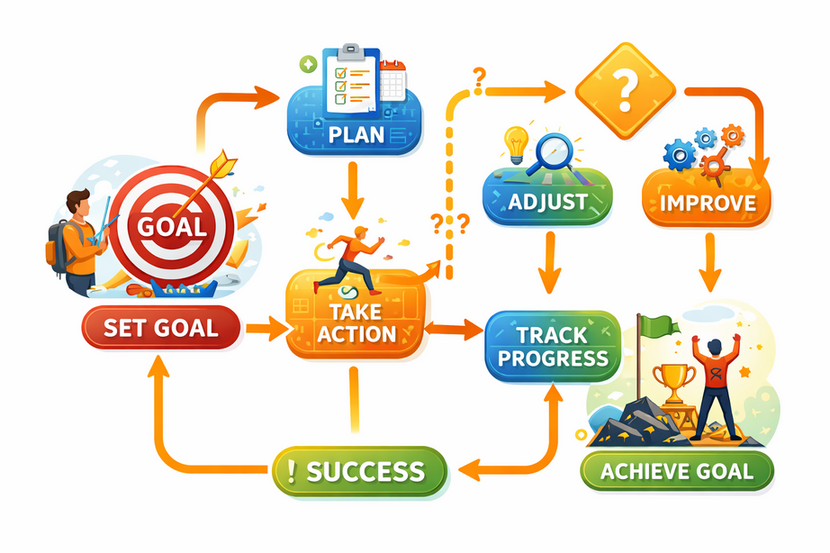
Setting goals creates direction, tracking progress turns effort into feedback, and completing meaningful work builds confidence. Even when you miss a target, the process of reviewing what happened can turn failure into useful information for your next attempt.
Setting a goal is more than a simple declaration of intent. It is a conscious decision to move forward instead of standing still. A meaningful goal gives direction to your time, energy, and attention. Without that clarity, it is easy to stay busy without actually moving toward anything important. Goals help transform vague desires into specific commitments that can be acted on, measured, and improved over time.
Many people underestimate the true power of clearly defined goals and consistent tracking. They set intentions like “I want to improve” or “I should do better”, but without a concrete target these thoughts rarely turn into action. Others begin with enthusiasm and lose momentum as soon as progress slows or difficulties appear. In practice, goal-setting and tracking are not just productivity techniques. They are systems that shape behavior, focus, and long-term growth.
Why Setting Goals Matters
A well-defined goal gives life structure and direction. It turns abstract desire into something measurable and actionable. Instead of wandering between ideas, you create a clear path forward. Replacing “I want to get fit” with “I will run 5 km in two months” immediately changes your approach. It creates a target, a timeline, and a standard you can work toward.
Clear goals also reduce decision fatigue. When you know what matters, it becomes easier to say no to distractions and yes to meaningful action. Time and energy stop being scattered and start being directed. That focus matters because progress usually depends less on dramatic effort and more on repeated aligned choices.
Goals also strengthen internal motivation. They give you a reason to act even when mood and energy are inconsistent. Motivation comes and goes, but clarity can remain stable. When a goal is personal and specific, it keeps your actions connected to a purpose instead of to temporary emotion.
The Importance of Tracking Progress
If setting a goal defines the destination, tracking defines the journey. Without tracking, progress becomes difficult to see, and when progress feels invisible, motivation often fades. Tracking matters because it converts effort into feedback. It shows what is really happening instead of what you assume is happening.
Tracking your progress helps you stay connected to your goal on a regular basis. It reveals patterns in your behavior, highlights what produces results, and makes it easier to notice when consistency starts to break down. It also gives you a way to measure improvement before the end result arrives.
Small actions matter here. Checking off a task, logging a workout, reviewing a weekly milestone, or writing a short reflection can all reinforce momentum. These small forms of evidence help build the identity of someone who follows through. Over time, tracking shifts attention away from wishful thinking and toward repeatable process.
What tracking helps you see
- Daily and weekly consistency
- Habits that move you forward
- Friction points that slow progress
- Whether the plan is realistic
- Early signs that adjustment is needed
Why Completion Builds Confidence
There is a unique kind of satisfaction in finishing something that once existed only as an idea. But the value of completion goes beyond the final outcome. When you complete a goal, you prove to yourself that you can stay consistent, work through resistance, and move something meaningful across the finish line.
Completion changes self-perception. Instead of seeing yourself as someone who only starts, you begin to see yourself as someone who can finish. That shift is important because it affects how you approach future challenges. Each completed goal becomes evidence that disciplined effort can produce real results.
Completion also creates a foundation for better goals in the future. When you finish one meaningful project, you learn what kind of planning worked, where you struggled, and what helped you stay engaged. That experience makes the next goal easier to approach with realism and confidence.
What Failure Teaches You
Failure is often misunderstood as the opposite of success, but in practice it is usually part of the same process. A missed target does not erase effort. It reveals where the plan was weak, where consistency broke down, or where expectations did not match reality. When progress is tracked, failure becomes easier to analyze and therefore easier to use constructively.
Instead of asking “Why did I fail?” in a vague and emotional way, you can examine patterns. You can see where your plan was unrealistic, which habits did not support the outcome, what external factors affected execution, and what needs to change before the next attempt. This makes failure informative instead of purely discouraging.
That perspective reduces fear. When failure becomes useful feedback, it stops feeling like a final judgment. It becomes part of the cycle of improvement. You adjust, refine, and begin again with more information than you had before.
What tracking reveals after failure
- Where the original plan was too optimistic
- Which routines were unsustainable
- Where consistency dropped
- What obstacles were underestimated
- What to improve before trying again
Common Mistakes in Goal Setting
Many goals fail not because of lack of effort, but because of poor structure. One common mistake is setting goals that are too vague. A vague goal cannot guide clear action. Another is expecting progress without any system of review or tracking. Without visibility, people rely on feeling instead of evidence.
Another frequent problem is trying to change too much at once. When too many goals compete for attention, focus weakens and execution becomes inconsistent. Unrealistic timelines also create unnecessary discouragement. People often abandon goals not because the goal is wrong, but because the pacing is unsustainable.
Avoiding these mistakes does not require perfection. It requires honesty, clarity, and a willingness to simplify. One well-defined goal with consistent tracking usually creates more progress than five ambitious goals managed without structure.
How to Stay Consistent
Consistency is often the hardest part of goal achievement. It becomes easier when the system is simple enough to repeat. Starting small helps reduce resistance. Building habits around the goal helps make action more automatic. Tracking progress daily or weekly helps maintain visibility. Celebrating small wins helps reinforce effort before the final reward arrives.
It is also important to reduce friction. The harder it is to start, the more often progress gets delayed. A good system lowers the barrier to action. That might mean preparing in advance, eliminating distractions, or deciding on the next step before the day begins.
Consistency does not mean perfection. It means returning to the process often enough that momentum is not lost. The ability to resume after a weak day or missed week is often more important than never slipping at all.
Practical ways to stay on track
- Start with a goal small enough to repeat consistently
- Build habits that support the goal automatically
- Review progress on a fixed schedule
- Celebrate small wins to reinforce effort
- Remove avoidable distractions from your environment
FAQ
What is the best way to track goals?
The best method is one you can maintain consistently. A simple weekly review, a habit tracker, a checklist, or a digital tool can all work if they make progress visible and easy to update.
How do I stay consistent with goals?
Focus on small repeatable actions, reduce friction, and keep your progress visible. Consistency becomes easier when the next step is clear and realistic.
Why do people fail to achieve goals?
Most people struggle because their goals are vague, their expectations are unrealistic, or they do not have a system to review progress and adjust their plan.
Is failing a goal still useful?
Yes. A failed goal can provide valuable information about your habits, planning, pacing, and assumptions. When you review it properly, failure becomes feedback.
Conclusion
Setting goals gives direction to effort. Tracking progress turns that effort into useful feedback. Completing meaningful work builds confidence and identity. And when things do not go as planned, reviewing the process helps transform failure into growth.
This creates a practical cycle: set, act, track, adjust, complete, repeat. Real change rarely comes from one dramatic breakthrough. It is usually built through consistent, intentional progress over time. Your goals do not need to impress anyone else. They need to matter to you. Once they do, and once you start tracking them seriously, progress becomes something you can understand, improve, and repeat.